Fairhill Adventure Gardens · Sunshine Coast
Fairhill the Wildlife Estate
Where nature still remembers
Fairhill is not only a place to visit where Happiness is in our Nature. It is a living landscape for wildlife, families, and future generations. A place where turtles still bask beside the water. Where dragons still roam the rocks. Where wallabies and kangaroos still move through the grass at dusk. Where butterflies still drift through the flowers. And where nature quietly thrives. Because every day in the gardens is an adventure.
At Fairhill, the wildlife was here long before us. Long before the nursery. Long before the café. Long before roads, fences, and even humans arrived on the Sunshine Coast.
This land has been home to ancient creatures for millions of years.
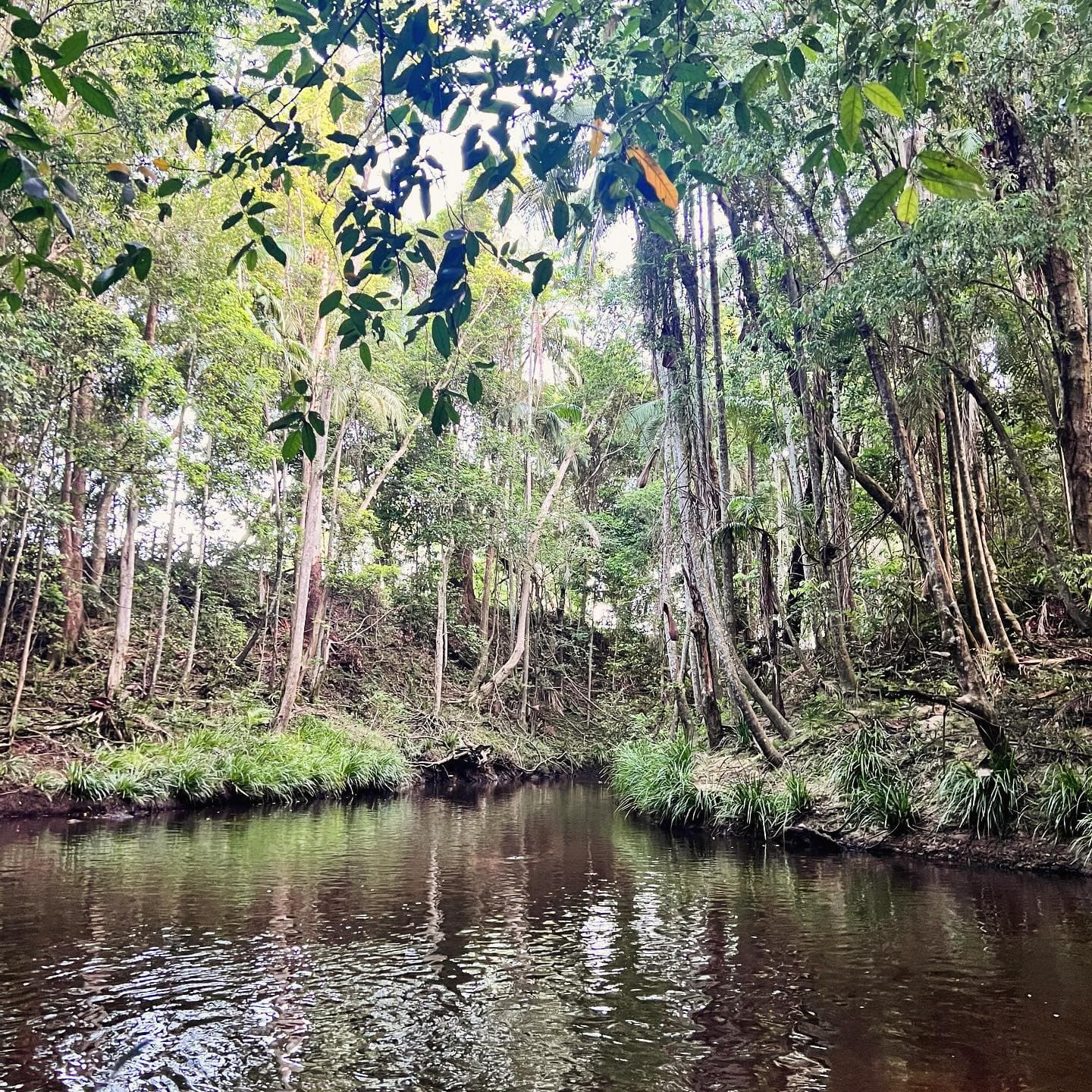
Today, Fairhill is evolving as a wildlife estate — a place where gardens, animals, people, water, soil, and habitat exist together in a richer and more connected way. Not a perfectly clipped landscape disconnected from nature, but a living environment full of movement, birdsong, pollinators, reptiles, frogs, butterflies, and wild encounters.
A place where nature still feels alive.
Ancient residents of Fairhill
Some of the wildlife living at Fairhill today belong to incredibly ancient lineages.
The Eastern Long-necked Turtles at Turtle Lake are descendants of turtle species that have existed since the time of the dinosaurs. Turtle ancestors have lived on Earth for more than 100 million years, surviving mass extinctions and extraordinary environmental change. Freshwater turtles have lived in Australia for millions of years and still depend on clean waterways and healthy wetlands to survive today.
The Australian Water Dragons are equally ancient survivors. Their reptilian ancestors date back tens of millions of years, carrying forward behaviours and adaptations from a far older Australia. Watching one bask beside the water or dart across the rocks is like seeing a small fragment of prehistoric Australia still thriving in the present.
The possums that move quietly through the trees at dusk belong to one of Australia's oldest marsupial groups, with ancestors dating back more than 20 million years. Long before suburbs and streetlights, possums were navigating Australian forests by moonlight.
The kangaroos and wallabies who move through Fairhill's grasslands and edges of forest belong to one of the world's most ancient marsupial lineages. Their ancestors evolved in Australia millions of years ago as the continent slowly separated from the rest of the world, adapting to changing climates, fire, drought, flood, and shifting landscapes over immense stretches of time.
Even the Pacific Black Ducks who visit our waterways represent ancient wetland ecosystems that have existed across Australia for millennia. Wetlands like these have always been places of life, feeding grounds, nesting areas, and safe refuges for birds and aquatic creatures.
The frogs that sing after rain, the butterflies drifting through the flowers, the lizards warming themselves on stones, the birds nesting in the gardens — all are part of a much bigger living story.
At Fairhill, we are simply the newest arrivals.
More magical than immaculate
Fairhill is not a sterile, overly manicured display garden.
We believe nature should feel alive.
That means layered planting, habitat-rich gardens, flowering meadows, pollinator plants, fallen branches where insects shelter, turtles basking beside lakes, butterflies moving through the flowers, and wildlife finding refuge among the trees.
Some areas are intentionally a little wilder.
Not neglected. Alive.
Because biodiversity needs complexity. Wildlife needs shelter. Pollinators need flowers. Frogs need damp spaces. Birds need nesting areas. Turtles need clean water.
And people, perhaps more than ever, need places where they can reconnect with the living world.
A different kind of family destination
Fairhill is becoming something increasingly rare — a place where children experience real nature firsthand.
Not behind glass or bars. Not only on screens.
But through muddy boots, chick cuddles, butterfly releases, turtle spotting, bird calls, goat walkabouts, rain on leaves, and wildlife encounters woven naturally into everyday life.
Children who grow up connected to animals and nature often grow into adults who protect them.
That matters deeply to us.
Come and discover the wild side of Fairhill
Spot turtles basking at Turtle Lake, watch water dragons dart across the rocks, and wind through gardens alive with birdsong, butterflies and wild encounters.
Open 8am–4pm daily · Closed 24–26 December and 1 January
114 Fairhill Road, Ninderry QLD 4561